When Philadelphia department store magnate John Wanamaker lamented about which half of his advertising budget he was wasting – he didn’t know which half – he perhaps inspired marketers everywhere to begin a journey. How do advertisers find accountability in ad spending? More than a century later, perhaps that pursuit is achieving a level of manifestation he could only dream about.
Direct marketers, for the past 100 years, have led the way in measurement and attribution – first in media metrics, and then later audience. Response rates, conversions, traffic generation, lead generation, audience personas… they built a discipline based on data and analysis. Today’s CMOs rely on data-driven dashboards to command such intelligence and apply it within their marketing activity and business operations, though not always with ease. Entering machine learning and artificial intelligence, and a whole new slate of measurable creative data elements, suddenly “creative intelligence” has busted through to sweeten the advertising product with resonance.
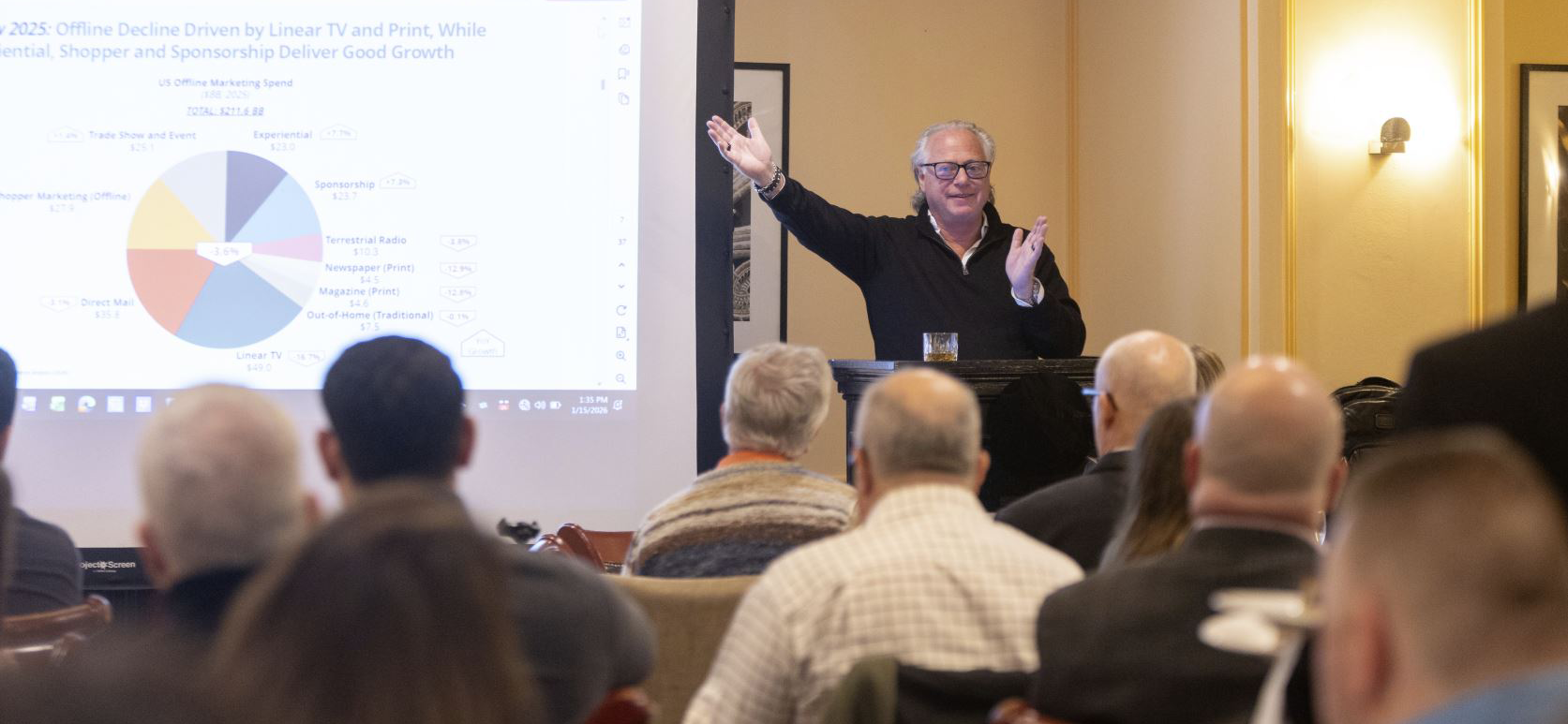
In January, during our Annual Outlook, Bruce Beigel, senior managing partner at Winterberry Group, discussed how a creative intelligence (CI) layer has evolved, and evolved quickly, among brands and advertisers during the past two years. In late January, Winterberry Group followed up Bruce’s MCNY address with its second report on the topic, “Creative Intelligence: Adopting & Operationalizing Creative Intelligence”
Essentially, creative spending is transforming from “non-working media” – a sunk cost – to “working media” by virtue of CI.
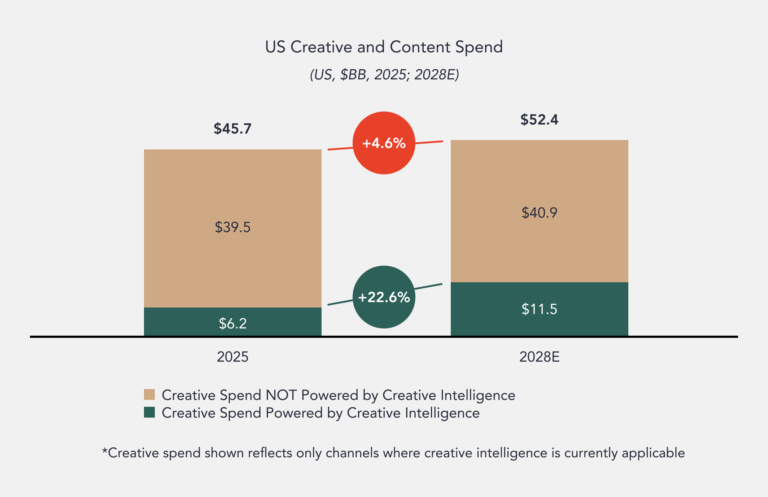
The $11.5B CI Pursuit – Which May Transform 60 Percent of Ad Creative Spending in the Next Decade
With speed and focus, U.S. and U.K. brands and their advertising partners are planning and implementing creative intelligence (CI) solutions and platforms to take greater control of their creative investments — with the power to transform more than 60 percent of total creative spend in the next decade, the report estimates. The allure of CI is its ability to enable personalized, continuously optimized content that clearly demonstrates the predictive power and measurability of creative effectiveness and its impact on marketing campaigns.
This CI layer is being built alongside the media and audience intelligence methodologies that have helped shape the effectiveness, planning and targeting of data-driven advertising and marketing during recent years, Winterberry Group reports.
“Over the last 24 months in particular, the market has seen rapid adoption of solutions grounded in creative data and analytics,” said Biegel, who is also one of the primary authors of the report. “These solutions enable marketers, from pre-testing through activation and optimization, to derive actionable insight from how individuals and households interact with creative and content – at the asset level, at the campaign level, and holistically across media channels – unlocking new gains and creative effectiveness and operational efficiency.”
“Programmatic and mobile advertising each took approximately five years to reach broad adoption,” Biegel said. “Creative Intelligence is expected to achieve market penetration in just three years, through 2028 and has a high probability of being a critical component in the majority of ad tech and martech solutions over the next five years.”
“Specifically, CI takes creative – often labeled as ‘non-working’ media – and translates it to ‘working’ media because important engagement metrics are derived from their deployment and analysis,” said Michael Harrison, CEO, Winterberry Group, said. “These metrics may include ad-level performance metrics, sentiment analysis, and increasingly audience reaction and attention-based metrics.”
When fully integrated with media and audience intelligence platforms, creative intelligence enables creative assets to be optimized on-the-fly using machine-learning and AI [artificial intelligence] tools and techniques, Harrison noted.
Leading the Way on CI Adoption: Consumer Packaged Goods and Retail
Among industries that have adopted creative intelligence the fastest are consumer packaged goods (21 percent of respondents surveyed for the report), and the retail sector (20 percent), with automotive (14 percent) and financial services (9 percent) also making investments, the study found.
“The next phase of growth is expected to be driven by deeper integration with digital paid media, enabling consistent messaging and optimization across the full spectrum of addressable channels,” Biegel said. “The immediate impact is seen principally in paid social environments, where native platform tools are now deployed. Programmatic display, digital audio, video and connected TV are next poised for growth. Linear and converged television will follow over time.”
The newest findings build on a previous 2025 Winterberry Group study which defined creative intelligence as the ability to collect, structure and analyze creative decisions against performance data to continuously optimize assets for effectiveness and engagement.
Other key findings from the report include: